

Getting people to visit your website is only half the job. Plenty of businesses invest in SEO, ads, and social media to drive traffic, only to see most of those visitors leave without ever getting in touch. If your website isn’t converting, the problem usually isn’t a lack of visitors — it’s what happens once they arrive.
Start With a Clear Value Proposition
Within a few seconds of landing on your homepage, a visitor should be able to answer three questions:
- What does this business do?
- Who is it for?
- Why should I choose them over alternatives?
If your homepage leads with a vague slogan instead of a clear statement of what you offer and who it’s for, you’re asking visitors to work harder than they’re willing to just to understand your business.
Design for Trust, Not Just Aesthetics
A polished design matters, but trust signals matter just as much:
- Genuine client reviews and testimonials (with names, photos, or business names where possible)
- Clear, easy-to-find contact information
- Real photos of your team, work, or location instead of generic stock imagery
- Case studies or examples of past results
- Professional, error-free copy — small typos and broken layouts quietly undermine credibility
Make the Next Step Obvious
Every important page on your site should have one clear call to action — not five competing options. Whether it’s “Get a Quote,” “Book a Call,” or “Contact Us,” the action should be visible without scrolling, repeated at logical points on the page, and use direct, specific language rather than generic phrases like “Learn More.”
Remove Friction
Every extra field in a form, every unclear step, and every confusing menu adds friction that costs you conversions. Practical fixes include:
- Shortening contact forms to only the essential fields
- Making your phone number and email clickable on mobile
- Avoiding unnecessary pop-ups that interrupt visitors before they’ve seen your content
- Ensuring the path from homepage to contact form takes no more than one or two clicks
Speed and Mobile Experience Are Part of Conversion, Not Separate From It
A visitor who has to wait, pinch-zoom, or fight with a broken layout on their phone is a visitor who leaves before converting — no amount of persuasive copy fixes a website that’s slow or hard to use. (See our articles on Core Web Vitals and mobile-first design for more detail.)
Use Content to Build Confidence Before the Sale
Blog posts, FAQs, and service pages that genuinely answer a potential customer’s questions — pricing expectations, how your process works, what makes you different — do more to build trust than generic marketing copy. This is also where a strong SEO and AEO strategy pays off twice: it brings in the right visitors and helps convert them once they arrive.
FAQ
What’s a good conversion rate for a business website?
It varies widely by industry, but many service-based small business websites see conversion rates between 2% and 5% of visitors taking a meaningful action. The right benchmark is your own site’s trend over time, not a generic industry number.
Should I focus on more traffic or better conversion first?
If your current traffic isn’t converting well, improving conversion usually delivers faster, cheaper results than simply driving more visitors to the same underperforming site.
How do I know what’s stopping visitors from converting?
Tools like heatmaps, session recordings, and Google Analytics funnels can show exactly where visitors drop off, which takes the guesswork out of what to fix first.
Want a Website Built to Convert?
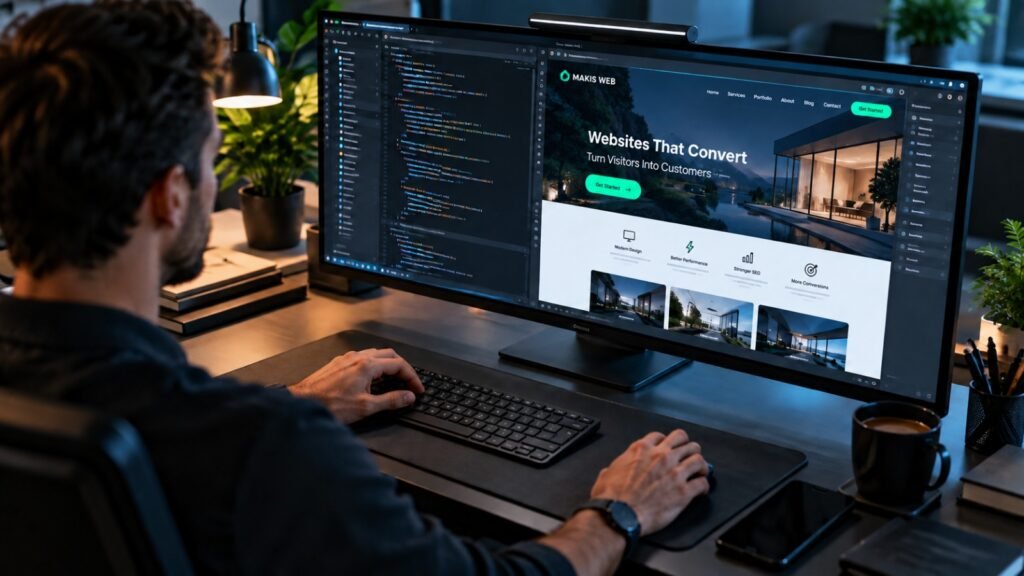
Makis Web designs websites with conversion built in from the first wireframe, not added as an afterthought. Contact our team to talk about your project.